

How Schools Can Prepare Students for AI: Lessons from Edu India Expo 2026
October 1, 2026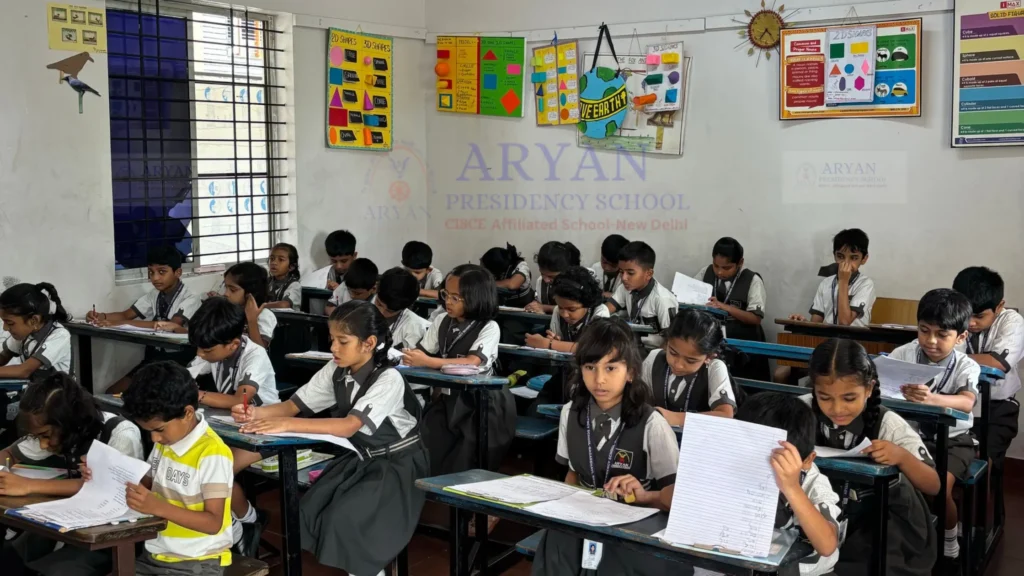
A Day in the Life of an ICSE Student: 7 Skills That Make a Difference
What does a typical day in the life of an ICSE student look like? It usually involves more than attending classes and completing homework. Depending on the school and grade, students may learn through classroom discussions, reading, practical activities, projects, sports, creative work, and regular assessments.
For parents choosing a School in Bengaluru, understanding this daily experience can help them decide whether the ICSE curriculum matches their child’s learning needs, interests, and future goals.
Imagine your child entering school in the morning, greeting friends, preparing for the first lesson, asking questions during class, participating in an activity, and returning home with something new to share. That is the kind of learning experience many parents hope for when choosing a school.
But what makes the ICSE curriculum worth considering? And how can it help children develop skills beyond remembering textbook answers?
Let’s explore a school day from a student’s perspective.
What Is the ICSE Curriculum?
ICSE stands for the Indian Certificate of Secondary Education. It is the Class 10 examination conducted by the Council for the Indian School Certificate Examinations (CISCE). The curriculum includes a broad range of academic subjects, with school-based internal assessment forming part of the assessment process.
In simple terms, ICSE offers students a structured school education that combines different subjects with opportunities for written work, projects, practical learning, and other school activities. The actual classroom experience depends on the school’s teaching methods, teachers, facilities, and the student’s grade. The board provides the curriculum and assessment framework, while the school brings the learning experience to life.
A Day in the Life of an ICSE Student
Every school follows its own timetable. The following is an illustrative school day, not an official timetable followed by every ICSE school.

8:00 AM – Arriving at School
The day begins with students greeting their teachers and classmates, settling into the classroom, and getting ready for lessons. Morning routines help children prepare mentally for the school day.

8:30 AM – Language and Communication
Students may read a passage, learn new vocabulary, write a paragraph, or discuss a story. These activities can help them practise comprehension, grammar, and expressing ideas clearly.

9:15 AM – Mathematics and Problem-Solving
Instead of only memorising a formula, students may work through examples, explain their methods, and practise solving different types of problems.

10:15 AM – Science and Exploration
A science lesson may involve diagrams, demonstrations, observations, experiments, or questions about everyday life. Practical activities depend on the lesson, age group, and available facilities.

11:15 AM – Break and Social Interaction
Students eat, talk with friends, and take a break from academic work. These everyday moments also provide opportunities to practise sharing, listening, and cooperation.

11:45 AM – Social Studies and Project Work
Students may explore history, geography, civics, or other topics through maps, discussions, assignments, presentations, and project work.

12:45 PM – Sports and Creative Activities
Depending on the timetable, students may participate in physical education, art, music, yoga, or other activities. These provide opportunities to explore interests beyond textbook learning.

1:30 PM – Review and Preparing to Go Home
Students may review the day’s lessons, note assignments, organise their books, and prepare for the next school day. Dismissal times vary by school and grade. A day like this combines learning, practice, interaction, and rest. The exact balance depends on the school, but the broader goal is to help students build knowledge and use it meaningfully.
Why Do Parents Choose an ICSE School for Their Child?
Parents do not all look for the same thing in a school. Some prioritise language skills, while others value academic depth, extracurricular opportunities, individual attention, or preparation for future studies.
The ICSE curriculum may appeal to families who want a broad academic programme with structured assessment and opportunities for project-based work. However, no board is automatically the best for every child. The quality of teaching, school environment, learning support, and the child’s interests matter just as much. Here are seven reasons families may consider an ICSE school.
7 Things That Can Help ICSE Students Develop Important Skills
The goal is not to say that ICSE students are automatically better than students from other boards. Children from every curriculum can do exceptionally well when they receive good teaching and support. Instead, these are seven learning opportunities that an ICSE education can offer when schools implement the curriculum effectively.
1. Strong English and Communication Skills
Language is more than learning grammar and spelling. It is about understanding information, expressing ideas, asking questions, and communicating with others. ICSE places importance on English as the medium of instruction and on oral and written language skills.
A student may practise these skills through:
- Reading stories and passages
- Writing essays and descriptions
- Learning grammar and vocabulary
- Taking part in discussions
- Preparing speeches and presentations
Why does this matter?
A child who learns to express ideas clearly can use that skill in examinations, group activities, interviews, higher education, and everyday life. For parents, it is worth checking whether a school provides regular opportunities for students to speak, read, write, and receive constructive feedback—not simply complete written exercises.
2. Understanding Concepts Instead of Just Memorising Answers
Imagine a student learning about evaporation. They could memorise its definition and move on. Or they could discuss why wet clothes dry in the sun, observe how water changes, and connect the lesson to everyday life. The second approach gives the student an opportunity to understand the concept and apply it.
An ICSE school can support this through:
- Classroom discussions
- Worked examples
- Practical demonstrations
- Application-based questions
- Teacher-guided problem-solving
The curriculum alone does not guarantee this teaching approach. Parents should look for teachers who encourage children to explain why an answer makes sense, not only what the answer is.
3. Research and Independent Thinking
Children naturally ask questions. A good learning environment helps them turn that curiosity into thoughtful investigation. Suppose a student is preparing a project about water conservation. They might collect information, organise facts, compare ideas, prepare a chart, and explain what they learned. Project work and internal assessment form part of the ICSE examination framework.
Through well-designed assignments, students can practise:
- Finding relevant information
- Organising ideas
- Comparing facts
- Explaining conclusions
- Presenting their work
These are useful skills for school and beyond.
Parent tip: Ask a prospective school how students complete projects. Do children research and explain their own work, or do parents end up doing most of it?
4. A Broad Academic Foundation
Children have different interests. One may enjoy science, another may love history, and someone else may be interested in computers, art, or writing. A broad curriculum exposes students to different subjects and helps them discover their strengths. Depending on the grade and subject choices, ICSE students study areas such as:
- English and other languages
- Mathematics
- Science
- History, Civics, and Geography
- Computer Applications and other elective subjects
- Art, physical education, and additional learning areas
The exact subject requirements and options vary by class and examination year, so parents should consult the current CISCE syllabus for the relevant grade.
Why is this useful?
A broad education can help children build general knowledge, explore different interests, and make more informed decisions about future subjects and careers.
5. Practical Learning and Application
Students need opportunities to connect classroom concepts with real situations. For example, mathematics can be applied when calculating a budget. Geography can help students understand maps and landscapes. Science can explain everyday observations, while computer studies can introduce structured problem-solving.
Depending on the grade and school’s teaching practices, students may participate in:
- Science practicals
- Subject-based assignments
- Demonstrations
- Computer activities
- Group tasks
- Real-world examples
CISCE’s school requirements also address practical facilities, libraries, physical education, and co-curricular opportunities.
The benefit depends on how meaningfully these opportunities are used. Practical learning works best when students understand the activity and reflect on what they learned.
6. Creativity, Teamwork, and Confidence
Learning does not happen only when a student sits with a textbook. Class presentations, art activities, sports, cultural programmes, and group assignments can give children opportunities to express themselves, work with others, and try unfamiliar tasks.
These experiences may help students practise:
- Sharing responsibilities
- Listening to different opinions
- Speaking in front of others
- Managing disagreements
- Developing creative ideas
- Learning from mistakes
CISCE recognises the role of sports and games alongside academic education.
Of course, students can develop these skills under any board. What matters is whether the school genuinely makes time for these activities and encourages participation.
7. Organisation and Responsibility
A school day involves many small responsibilities: arriving on time, carrying the right books, completing assignments, preparing for tests, and keeping track of deadlines. As students grow, they can gradually learn to manage these tasks with less parental supervision.
A supportive school can help students develop these habits through:
- Maintaining notebooks
- Following a timetable
- Planning project work
- Preparing for assessments
- Meeting deadlines
- Reviewing mistakes and improving
These habits are valuable because students eventually need to manage more complex academic work independently. However, responsibility should not mean constant pressure. Children also need rest, encouragement, play, and reasonable expectations for their age.
Is the ICSE Curriculum Better Than CBSE or the State Board?
This is a common question among parents choosing a school in Bengaluru. The honest answer is that ICSE is not automatically better than CBSE or the Karnataka State Board for every child. Each curriculum has its own structure, and the best fit depends on the student’s needs, the family’s plans, and the quality of the school.
Here is a simple comparison to help parents begin their research.
| What parents are considering | What to explore |
|---|---|
| English and communication | The language requirements and daily teaching practices |
| Academic learning | Subject depth, classroom teaching, and assessment methods |
| Practical activities | Laboratory access, projects, and hands-on learning |
| Future education | Subject choices and the child’s possible academic pathway |
| Extracurricular activities | Sports, art, music, clubs, and student participation |
| School environment | Teacher support, class size, safety, and communication with parents |
| Daily convenience | Travel time, school timings, workload, and fees |
Rather than choosing a board based only on its reputation, visit schools and ask how the curriculum is taught in everyday classrooms. For families who value a broad academic programme, structured language learning, and opportunities for projects and practical work, an ICSE school may be a suitable option.
How Can Parents Support an ICSE Student at Home?
Parents do not need to become their child’s second teacher. A calm, consistent routine can make a meaningful difference.
Here are five practical ways to help:
1. Encourage daily reading. Even a short reading session can create opportunities to build vocabulary and comprehension.
2. Ask questions about the school day. Instead of asking only, “What did you learn?”, try, “What was the most interesting thing you learned today?”
3. Make time for homework and breaks. A predictable routine helps children balance schoolwork, rest, and recreation.
4. Let children attempt problems independently. Offer guidance when needed, but give them time to think and try.
5. Appreciate effort and progress. Recognise improvement, curiosity, persistence, and the willingness to ask for help—not only marks.
Most importantly, keep communication open. If your child is finding a subject difficult or feeling overwhelmed, speak with the teacher before the concern grows.
How to Choose the Right ICSE School in Bengaluru
The curriculum is important, but the school experience matters just as much.
When visiting an ICSE school in Nagarbhavi or elsewhere in Bengaluru, consider asking these questions:
- How do teachers explain difficult concepts?
- How often do students participate in practical activities and projects?
- What support is available when a child struggles academically?
- Are sports, arts, and other activities part of school life?
- How does the school communicate with parents?
- What facilities are available for reading, activities, and learning?
- How does the school support student wellbeing and safety?
Look beyond impressive buildings and brochures. Ask to understand the actual teaching methods, student support systems, daily routines, and opportunities available to your child. For parents exploring Aryan Presidency School in Nagarbhavi, a campus visit and conversation with the school team can help you understand its learning environment and decide whether it suits your family’s expectations.
The right school is one where your child can learn, ask questions, receive appropriate guidance, and gradually develop confidence and independence.
Frequently Asked Questions
1. What does a day in the life of an ICSE student look like?
A typical school day may include language lessons, mathematics, science, social studies, breaks, practical or project work, and extracurricular activities. The exact timetable varies by school and grade.
2. What are the benefits of the ICSE curriculum?
The ICSE curriculum offers a broad academic programme, an emphasis on English, and opportunities for internal assessment and project work. The benefits students experience depend on the quality of teaching and how effectively the school implements the curriculum.
3. Does ICSE help improve English communication?
ICSE uses English as the medium of instruction and places importance on English language skills. Regular reading, writing, speaking, and feedback at school and home can help students improve communication.
4. Is ICSE difficult for students?
The experience varies by student, grade, subject, and school. Students may need consistent study habits and practice, but supportive teaching, a manageable routine, and early help with difficult topics can make learning more comfortable.
5. Is ICSE suitable for every child?
Not necessarily. Consider your child’s learning preferences, interests, academic needs, future plans, and the school’s teaching quality before deciding.
6. Do ICSE students participate in sports and extracurricular activities?
Schools provide activities according to their facilities and programmes. CISCE recognises the importance of sports, and parents should check the actual activities offered by the school they are considering.
7. What should parents look for when choosing an ICSE school in Nagarbhavi?
Look at teaching quality, teacher support, facilities, safety, extracurricular activities, communication with parents, daily travel, and whether the school’s approach fits your child.
Final Thoughts : More Than a School Day
A day in the life of an ICSE student can include lessons, questions, practical activities, friendships, challenges, and small achievements. The value of this experience is not simply the number of subjects a child studies. It is also about how the child learns to understand ideas, express thoughts, solve problems, work with others, and take responsibility.
The ICSE curriculum can provide a strong foundation for these opportunities, but the school and family play important roles in helping children make the most of them. When choosing a school, look beyond the board name. Look at the everyday learning experience your child will receive. A supportive school can help turn ordinary school days into opportunities for curiosity, growth, and lifelong learning.