

My Child Is Shy in Class: Practical Tips for Parents in Nagarbhavi
July 14, 2026
How to Improve Reading Habits in Children
August 10, 2026
As parents, we celebrate every small milestone our children achieve, from reading their first sentence to solving a math problem independently. But sometimes, the changes we notice are not as joyful. Your child may suddenly avoid homework, lose interest in school, become unusually quiet after classes, or say things like, “I’m not good at studies.” These moments can leave parents feeling confused and worried.
If you’ve recently searched for the Best School Near Me, chances are you’re not only looking for a school with good academic results. You’re looking for a place where teachers understand children, notice their challenges early, and help them grow with confidence.
The truth is, academic struggles rarely begin with poor marks alone. They often appear much earlier through changes in behaviour, confidence, concentration, or communication. Recognising these signs early can make a significant difference in your child’s learning journey.
The good news is that most academic challenges can be addressed when parents and teachers work together. Children do not need perfect report cards—they need understanding, encouragement, and the right learning environment.
In this guide, we’ll explore the early signs that your child may be struggling academically, the possible reasons behind these challenges, and practical ways you can support them at home. You’ll also learn how schools can play an important role in helping children regain confidence and enjoy learning again.
Whether your child is in LKG, UKG, primary school, or middle school, this article will help you identify what to watch for before small concerns become bigger learning difficulties.
What Does Academic Struggle Really Mean?
When parents hear the phrase “struggling academically,” they often imagine low marks or failing exams. While marks are one indicator, they rarely tell the complete story.
Academic struggles can begin long before report cards arrive. A child who once eagerly shared stories about school may suddenly become quiet. Another child may spend hours on homework but still find it difficult to remember what they learned. Some children lose confidence, while others become frustrated or distracted in class. These changes are often the first signs that they need additional support—not criticism.
Every child learns differently. Some understand concepts quickly, while others need more time, practice, or a different teaching approach. That doesn’t mean they are less capable. It simply means their learning needs may be different.
For younger children in LKG and UKG, academic struggles may appear as difficulty recognising letters, numbers, colours, or following simple classroom instructions. In primary and middle school, parents might notice incomplete homework, declining grades, hesitation to answer questions, or a lack of interest in reading.
Many parents in Bangalore, Nagarbhavi, and nearby areas like Chandra Layout and Vijayanagar tell teachers that they first noticed something was different when their child stopped talking about school altogether. This is why observing your child’s behaviour at home can be just as important as checking exam results.
The goal is not to label children as “weak students.” Instead, it’s to understand why they are finding learning difficult and how both parents and schools can support them.
When academic challenges are identified early, children often regain their confidence much faster. A little extra attention today can prevent bigger learning gaps tomorrow.
Parent Tip
Instead of asking,
“How many marks did you get today?”
try asking,
- “What was the most interesting thing you learned today?”
- “Was there anything you found difficult in class?”
- “Did your teacher explain something in a new way today?”
These simple questions encourage children to talk about their learning experience rather than focusing only on results. Over time, you’ll gain a better understanding of how they feel about school and whether they need extra support.
Did You Know?
Many children who struggle academically are not lacking intelligence. They may simply need:
- More time to understand new concepts
- A different teaching approach
- Regular revision
- Better study habits
- Emotional encouragement from parents and teachers
Research in child development consistently shows that confidence, consistency, and supportive relationships play a major role in academic success. Children who feel safe asking questions are more likely to become confident learners than those who fear making mistakes..
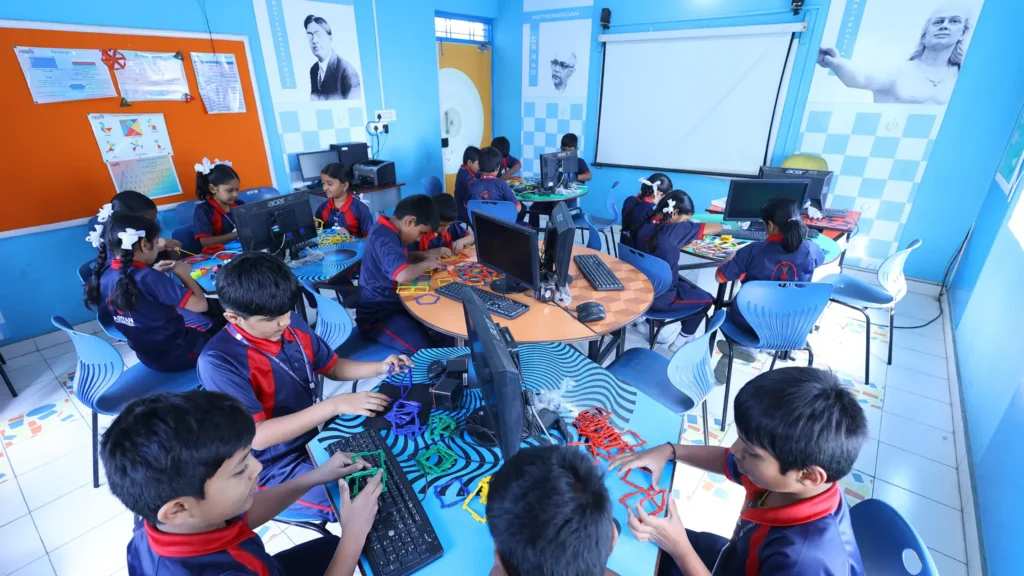
10 Signs Your Child Is Struggling Academically
Not every child who struggles with learning will say, “I’m finding school difficult.” In fact, many children try to hide their challenges because they don’t want to disappoint their parents or teachers.
Instead of looking only at report cards, pay attention to your child’s daily behaviour. Small changes in attitude, confidence, or study habits can often tell you much more than exam marks.
Here are ten common signs parents should watch for.
1. Your Child Avoids Homework
One of the earliest signs of academic difficulty is avoiding homework.
Your child may suddenly say they are tired, ask to finish it later, or become distracted by toys, television, or mobile phones. While every child has days when they don’t feel like studying, repeated avoidance may indicate that the work feels too difficult or confusing.
For example, a child who once completed homework independently may now need constant reminders or become upset as soon as books are opened.
Parent Tip
Instead of saying,
“Finish your homework now!”
try asking,
“Which part feels difficult today?”
Sometimes a simple conversation helps you understand the real problem.
2. Confidence Begins to Drop
Children who struggle academically often begin doubting themselves.
You may hear statements like:
- “I’m not smart.”
- “Everyone else is better than me.”
- “I can’t do maths.”
- “I’ll never get good marks.”
These comments should never be ignored.
Low confidence often affects learning more than the subject itself. When children believe they cannot succeed, they stop trying.
Real-Life Example
A student who once enjoyed answering questions in class may suddenly stop raising their hand—not because they don’t know the answer, but because they’re afraid of making mistakes.
Parent Tip
Praise effort rather than results.
Instead of saying,
“Why did you only get 70 marks?”
say,
“I’m proud that you kept trying. Let’s work together on the difficult parts.”
3. They Forget What They Learned Quickly
Does your child seem to understand a lesson one day but forget it a few days later?
This doesn’t always mean they weren’t paying attention.
Children remember information better when they understand concepts, revise regularly, and apply what they’ve learned through activities and discussions.
Without reinforcement, even well-taught lessons can fade from memory.
Parent Tip
Spend just 10–15 minutes each evening asking your child to explain one new thing they learned in school.
Teaching someone else is one of the best ways to strengthen memory.
4. Difficulty Concentrating During Studies
Many parents notice that homework which should take 20 minutes stretches into an hour.
The child keeps looking around the room, playing with stationery, or getting distracted by every little sound.
Occasional distraction is normal.
However, if your child struggles to focus every day, it may affect their understanding and classroom performance.
Possible Reasons
- Lack of sleep
- Too much screen time
- Study environment with distractions
- Lessons that are difficult to understand
Parent Tip
Create a quiet study corner and encourage short study sessions with small breaks instead of long hours of continuous study.
5. Sudden Drop in Marks
One low test score isn’t usually a reason to panic.
Children have good days and difficult days.
However, if marks continue falling across several subjects, it’s important to understand why.
The reason may not be laziness.
It could be:
- learning gaps
- difficulty understanding concepts
- emotional stress
- lack of revision
- reduced confidence
Rather than focusing only on the numbers, look for patterns.
Parent Tip
Talk to your child’s teacher early instead of waiting until the annual examination.
Small concerns are much easier to address than larger learning gaps.
6. Your Child No Longer Enjoys School
Children naturally have occasional days when they don’t feel like going to school.
But if your child frequently says:
- “I don’t want to go.”
- “School is boring.”
- “I don’t like studying anymore.”
it’s worth exploring the reason.
Sometimes children avoid school because they’re finding lessons difficult.
Other times, they may feel left behind or worry about making mistakes in front of classmates.
Parent Tip
Instead of forcing the conversation, ask gentle questions during relaxed moments like dinner or while travelling.
Children often open up when they don’t feel pressured.
7. Excessive Screen Time Replaces Learning
After school, many children immediately reach for mobile phones, tablets, or television.
While technology can support education, too much recreational screen time can reduce concentration and leave less time for reading, homework, and creative play.
Children who spend several hours on short videos or games often find it harder to focus on longer learning tasks.
Parent Tip
Create a balanced daily routine that includes:
- homework
- outdoor play
- reading
- family conversations
- limited recreational screen time
The goal isn’t to remove technology but to use it wisely.
8. Reading and Writing Become Difficult
Reading is the foundation of learning.
If your child struggles to read age-appropriate books, skips words while reading aloud, or avoids writing activities, they may find many school subjects challenging.
Writing difficulties can also appear as:
- untidy handwriting
- incomplete sentences
- spelling mistakes beyond the expected level
- difficulty organising ideas
These signs deserve attention, especially in the early primary years.
Parent Tip
Read together for just 15 minutes every day.
Choose stories your child enjoys rather than treating reading as another homework task.
9. Communication Skills Become Weaker
Children who are finding learning difficult sometimes stop participating in conversations.
You may notice they:
- answer with only one or two words
- hesitate before speaking
- avoid asking questions
- struggle to explain simple ideas
Strong communication skills often reflect strong understanding.
When children cannot explain what they’ve learned, they may not fully understand the concept.
Parent Tip
Ask open-ended questions like:
“What was the funniest thing that happened in school today?”
or
“Can you teach me something you learned today?”
This encourages children to express themselves naturally.
10. Anxiety Before Tests and Assessments
Feeling nervous before an exam is completely normal.
However, excessive anxiety deserves attention.
Some children complain of headaches, stomach aches, or suddenly become emotional before tests.
Others may cry, refuse to study, or believe they will fail even when they are well prepared.
Often, the fear isn’t about the exam itself.
It’s about disappointing parents or comparing themselves with others.
Parent Tip
Help your child understand that tests measure progress—not their worth.
Celebrate consistent effort, improvement, and learning rather than expecting perfection.
Quick Checklist for Parents
If you’ve noticed three or more of these signs consistently over the past few weeks, it may be time to look a little deeper.
- Avoids homework regularly
- Confidence has reduced
- Forgets lessons quickly
- Finds it difficult to concentrate
- Marks are gradually dropping
- Doesn’t enjoy going to school
- Spends excessive time on screens
- Reading or writing has become difficult
- Doesn’t communicate confidently
- Feels anxious before tests
Remember, these signs don’t automatically mean something is seriously wrong. Every child learns at a different pace, and occasional struggles are a normal part of growing up.
The key is not to ignore patterns. Early support from parents and teachers can make a big difference in helping children regain confidence and enjoy learning again.
Expert Advice
One of the biggest misconceptions is that academic struggles always reflect a lack of ability. In reality, many children who face difficulties are capable learners—they simply need the right support, teaching approach, or extra time to understand concepts.
As an educator, one of the most encouraging moments is seeing a child who once hesitated to answer questions gradually become confident enough to participate in class. This transformation rarely happens overnight. It comes through patient guidance, consistent routines, and a partnership between parents and teachers.
If you notice these signs early, don’t wait for the next report card. A simple conversation with your child and their teacher can often uncover the cause and lead to practical solutions before the challenge grows.
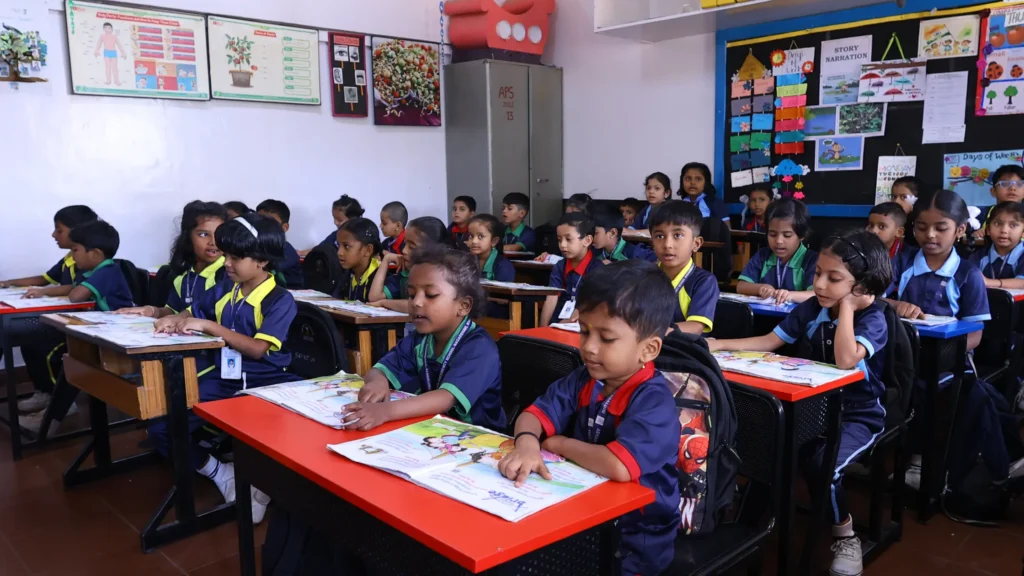
Why Children Struggle Academically
Every child learns at their own pace. While some understand new concepts quickly, others need a little more time, practice, or a different way of learning. Academic struggles are rarely caused by a lack of intelligence. More often, they are the result of small challenges that build up over time.
Understanding these reasons can help parents respond with patience instead of frustration.
1. Learning Gaps from Earlier Classes
Sometimes a child struggles with a new topic because they missed an important concept in an earlier class.
For example, a student who has difficulty with multiplication may later find division, fractions, and algebra much harder. Similarly, if a child struggles with basic reading skills, understanding longer passages becomes challenging.
Learning is like building a house. A weak foundation makes every new layer more difficult to support.
Parent Tip
If your child repeatedly struggles with the same subject, try identifying where the confusion first began instead of focusing only on the latest chapter.
2. Lack of Good Study Habits
Many children study only before exams. While this may help them remember information for a short time, it doesn’t build long-term understanding.
Good learning comes from regular practice, not last-minute preparation.
Simple habits like reviewing class notes, reading for a few minutes every day, and asking questions during class make a big difference over time.
Parent Tip
Encourage your child to spend just 15–20 minutes revising daily rather than studying for several hours only before tests.
3. Too Much Screen Time
Digital devices have become a part of children’s daily lives. Educational videos and learning apps can certainly be useful, but spending several hours watching short videos, gaming, or scrolling through social media can reduce attention span.
Children often become used to quick entertainment, making it harder to focus on reading, writing, or solving problems that require patience.
This doesn’t mean screens are the enemy. The key is maintaining balance.
Parent Tip
Set screen-free hours during homework time and encourage activities like reading, drawing, outdoor play, or family conversations.
4. Poor Sleep Routine
Sleep is one of the most important parts of learning.
During sleep, the brain processes and stores the information learned throughout the day. Children who stay up late or don’t get enough rest often find it difficult to concentrate, remember lessons, and stay active in class.
You may notice your child becoming irritable, distracted, or tired during study time.
Parent Tip
Create a consistent bedtime routine. Avoid screen use at least one hour before sleep to help children relax naturally.
5. Fear of Making Mistakes
Some children know the answer but remain silent because they worry about being wrong.
Over time, this fear affects classroom participation and confidence.
When children believe mistakes are failures instead of opportunities to learn, they stop asking questions and become less engaged in class.
A supportive learning environment encourages children to try, make mistakes, and improve without fear.
Parent Tip
Celebrate effort at home. Let your child know that making mistakes is a normal part of learning.
6. Emotional Stress
Children experience stress too.
Changes at home, friendship issues, family expectations, frequent comparisons, or examination pressure can all affect their ability to focus on learning.
Sometimes what looks like poor academic performance is actually an emotional struggle.
Parents who listen calmly often discover concerns that children were afraid to express.
Parent Tip
Spend a few minutes talking with your child every day without discussing marks or homework. Building emotional trust helps children open up more easily.
7. Every Child Learns Differently
No two children learn in exactly the same way.
Some understand best through stories.
Others learn by seeing pictures, performing activities, solving practical problems, or discussing ideas.
When teaching matches a child’s learning style, understanding becomes much easier.
This is why activity-based learning, classroom discussions, visual aids, and hands-on experiences are so valuable, especially during the primary years.
What Parents Can Do at Home
Parents don’t need to become teachers to support their children’s education. Small daily habits often have a greater impact than long study sessions.
Here are some simple ways to help your child build stronger learning habits.
Encourage Daily Reading
Reading is one of the best ways to improve vocabulary, comprehension, imagination, and communication skills.
Even 15–20 minutes of reading each day helps children become more confident learners.
Choose books that match your child’s interests rather than forcing difficult material.
Create a Consistent Routine
Children feel more secure when their daily schedule is predictable.
A healthy routine may include:
- School
- Healthy meals
- Homework
- Outdoor play
- Reading
- Family time
- Adequate sleep
Consistency helps children develop discipline without feeling pressured.
Focus on Understanding, Not Memorising
Instead of asking children to repeat answers, encourage them to explain concepts in their own words.
Questions like:
- “Can you teach this lesson to me?”
- “How would you explain this to your friend?”
help strengthen understanding and long-term memory.
Appreciate Progress
Children thrive when parents notice improvement instead of expecting perfection.
Celebrate small achievements like:
- completing homework independently
- improving handwriting
- reading confidently
- asking thoughtful questions
Positive encouragement builds confidence and motivates children to keep learning.
Stay Connected With Teachers
Teachers observe children in situations parents don’t always see.
Regular communication helps identify learning difficulties before they become bigger challenges.
Parent-teacher meetings are not only for discussing report cards—they are opportunities to work together for the child’s growth.
Common Mistakes Parents Should Avoid
Parents naturally want the best for their children. However, some well-intentioned habits may unintentionally increase pressure instead of improving learning.
Here are a few common mistakes to avoid.
Comparing Your Child With Others
Every child develops at a different pace.
Statements like,
“Look how well your cousin studies.”
or
“Your friend scored higher than you.”
can reduce confidence and create unnecessary stress.
Instead, compare your child only with their own previous progress.
Focusing Only on Marks
Marks are important, but they don’t measure creativity, curiosity, communication, kindness, or problem-solving skills.
Celebrate learning—not just report cards.
Children who enjoy learning often perform better in the long run.
Doing Homework for Your Child
Helping is good.
Completing homework on your child’s behalf is not.
Children learn responsibility by solving problems themselves, even if they make mistakes along the way.
Offer guidance instead of giving answers.
Overloading Children With Tuition Classes
Many parents assume more tuition means better results.
In reality, children also need time to rest, play, read, and spend time with family.
A balanced routine often produces better learning than an overloaded schedule.
Expecting Perfection
No child scores full marks in every subject throughout their school life.
Unrealistic expectations can create fear instead of motivation.
Encourage your child to improve step by step rather than chasing perfection.
Ignoring Emotional Well-being
Academic success and emotional health go hand in hand.
A child who feels safe, supported, and understood is more likely to enjoy learning and overcome challenges with confidence.
Sometimes listening is more valuable than giving advice.
When Should Parents Speak to Teachers?
Many parents wait until the annual report card or parent-teacher meeting to discuss their child’s progress. By then, a small learning gap may have become a bigger challenge. Talking to teachers early helps identify concerns before they begin affecting your child’s confidence and interest in learning.
If you notice any of the following signs for several weeks, it is a good time to schedule a conversation with your child’s teacher.
- Your child avoids homework regularly.
- Test scores continue to decline.
- They have difficulty understanding classroom lessons.
- They often complain that school is “too hard.”
- Their confidence has noticeably reduced.
- They seem anxious before tests or classroom activities.
- They have become unusually quiet or withdrawn.
Remember, teachers spend several hours each day observing your child in different learning situations. They can often identify patterns that may not be visible at home.
Make Parent-Teacher Meetings More Productive
Instead of only asking,
“How many marks did my child get?”
consider asking questions like:
- Which subjects does my child enjoy the most?
- Where do they need additional support?
- How do they participate in classroom discussions?
- How can I help reinforce learning at home?
- Have you noticed any changes in confidence or behaviour?
These conversations build a strong partnership between parents and teachers, creating the best support system for the child.
How Schools Support Children Beyond Academics
A good school does much more than complete the syllabus. It creates an environment where children feel confident, curious, and motivated to learn every day.
Strong schools recognise that every child has unique strengths and learning styles. Instead of expecting every student to learn in the same way, they use different teaching methods to help concepts become easier to understand.
Some of the most effective ways schools support children include:
Concept-Based Learning
Instead of encouraging students to memorise answers, teachers focus on helping them understand the concept first.
When children understand why something works, remembering it becomes much easier.
Regular Revision Activities
Learning doesn’t end after one lesson.
Good schools revisit important concepts through revision sessions, quizzes, worksheets, classroom discussions, and practical activities. These repeated learning opportunities help move information into long-term memory.
Continuous Teacher Observation
Teachers observe much more than academic performance.
They notice:
- classroom participation
- confidence
- communication skills
- behaviour
- teamwork
- curiosity
- learning pace
This allows them to provide support before problems become serious.
Activity-Based Learning
Children learn better when they actively participate.
Experiments, projects, storytelling, group activities, educational games, and hands-on learning make lessons enjoyable while improving understanding and memory.
This approach is especially effective for younger learners in primary school.
Building Communication Skills
Confident learners ask questions.
Schools that encourage presentations, reading activities, storytelling, public speaking, and classroom discussions help children express their ideas clearly.
Strong communication skills also improve confidence across every subject.
Regular Assessment With Purpose
Assessments should help teachers understand student progress—not simply assign marks.
Short classroom activities, weekly reviews, and constructive feedback allow teachers to identify learning gaps early and provide timely support.
How Aryan Presidency School Supports Children’s Growth
Children learn best when school and parents work together. At Aryan Presidency School, learning is designed to help students understand concepts, develop confidence, and enjoy coming to school every day.
Being an ICSE School in Nagarbhavi, the focus goes beyond completing textbooks. Teachers prepare structured lesson plans for every subject before entering the classroom. Whether it is English, Mathematics, Science, Social Studies, or languages, lessons are planned step by step so children can build a strong understanding instead of simply memorising information.
For younger learners, activity-based learning and play-based learning make classroom experiences engaging and meaningful. Stories, classroom discussions, hands-on activities, and practical examples help children connect with what they are learning.
Communication is another important part of daily learning. Students are encouraged to read, ask questions, share ideas, and participate confidently in classroom discussions. These experiences gradually improve speaking skills, writing ability, and overall confidence.
Teachers also understand that every child learns differently. Some students need extra practice, while others benefit from visual demonstrations or individual guidance. By observing students closely and maintaining regular communication with parents, teachers can provide timely support whenever needed.
The school also believes that learning continues beyond the classroom. Parent-teacher interactions, regular feedback, and shared goals help create consistency between home and school. This partnership enables children to feel supported both academically and emotionally.
A safe campus, structured daily routines, experienced educators, and a caring learning environment help students develop not only academically but also socially and emotionally.
Ultimately, the aim is simple: to help every child become a confident learner who enjoys discovering new ideas and is prepared for future success.
Expert advice
Academic success is rarely achieved through pressure alone. It grows when children feel understood, supported, and encouraged to learn at their own pace.
If you notice changes in your child’s confidence, behaviour, or interest in learning, don’t wait for the next exam. A simple conversation today can prevent bigger challenges tomorrow.
Children remember how adults made them feel far longer than they remember their marks. When parents and teachers work as partners, children develop resilience, curiosity, and the confidence to keep learning throughout life.
Quick Checklist for Parents
Before you worry about marks, ask yourself:
- Is my child happy going to school?
- Does my child understand lessons instead of memorising them?
- Are we encouraging effort more than results?
- Is there enough time for sleep, play, and reading?
- Do we communicate regularly with teachers?
- Does my child feel comfortable asking questions?
- Are we celebrating small improvements?
If your answer is “Yes” to most of these questions, you are already creating a positive learning environment for your child.
APS Thoughts
Every child experiences challenges while learning. Some need more time to understand concepts, while others need encouragement to rebuild confidence. These moments should never be seen as failure—they are opportunities for growth.
The earlier parents recognise the signs of academic struggle, the easier it becomes to provide the right support. Listening to your child, maintaining open communication with teachers, creating healthy study habits, and choosing the Best School Near Me that values both academics and emotional well-being can make a lasting difference.
If you are looking for a School in Nagarbhavi that focuses on concept-based learning, communication skills, confidence building, and strong parent partnerships, take the time to visit the campus, interact with teachers, and observe the learning environment firsthand. Sometimes, seeing children learn with confidence tells you more than any brochure or advertisement ever can.
At the end of the day, success is not only measured by report cards. It is reflected in a child who enjoys learning, asks questions without fear, and walks into school every morning with confidence.
Frequently Asked Questions (FAQs)
1. Why is my child suddenly struggling in school?
Children may struggle because of learning gaps, stress, changes in routine, lack of sleep, excessive screen time, or reduced confidence. Speaking with your child and their teacher early can help identify the reason and provide timely support.
2. How do I know if my child has learning difficulties?
Persistent signs such as avoiding homework, difficulty understanding lessons, poor concentration, falling grades, low confidence, or problems with reading and writing may indicate that your child needs additional support. A teacher’s observations can also provide valuable insight.
3. Can changing schools improve academic performance?
If a child is not receiving the support they need, moving to a school with concept-based learning, experienced teachers, and a nurturing environment may help. However, changing schools should be based on your child’s educational needs rather than exam results alone.
4. When should I talk to my child’s teacher?
Don’t wait until the final exams. If you notice consistent changes in behaviour, confidence, classroom interest, or academic performance for several weeks, schedule a meeting with the teacher. Early communication often leads to better outcomes.
5. How can I improve my child’s concentration while studying?
Create a regular study routine, reduce unnecessary screen time, ensure adequate sleep, encourage reading, and provide a quiet place for learning. Short, focused study sessions with breaks are usually more effective than long hours of continuous study.
6. What are the early signs of academic problems?
Some common signs include avoiding homework, forgetting lessons quickly, low confidence, declining marks, poor concentration, anxiety before tests, difficulty reading, and losing interest in school activities.
7. How do schools help children who are struggling academically?
Schools support students through structured lesson planning, concept-based teaching, regular revision, classroom discussions, activity-based learning, continuous assessment, and close collaboration with parents to address learning gaps early.
8. How does activity-based learning improve understanding?
Activity-based learning allows children to explore concepts through experiments, storytelling, projects, discussions, and hands-on experiences. This approach improves understanding, increases classroom engagement, and helps children remember lessons more effectively than rote memorisation.